Is a barista course worth it?
What you actually learn about grinding, extraction, and milk, how much of it survives the trip home, and which format fits your coffee ambitions.
What you actually learn
A good barista course demystifies espresso by reducing it to a few variables: how fine you grind, how much coffee you dose, and how long the water runs. You pull shots, change one variable at a time, and taste what over- and under-extraction actually mean instead of just reading the words.
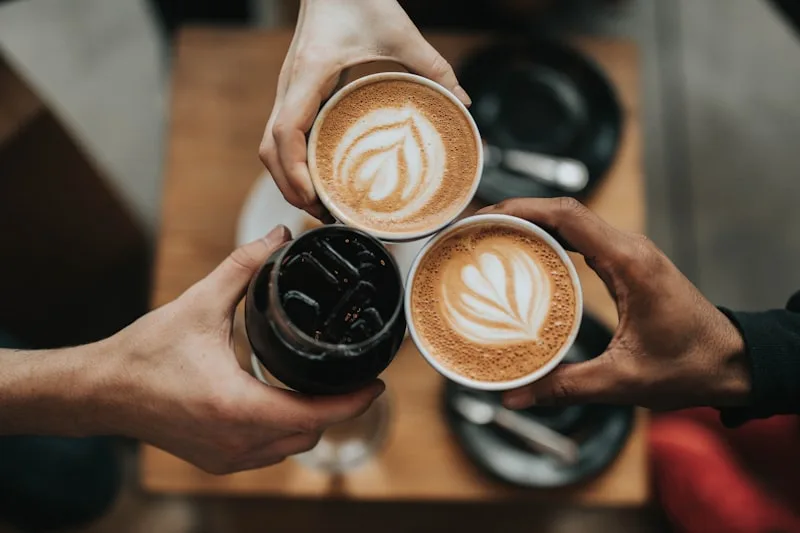
The second half belongs to milk: steaming silky microfoam instead of bubble bath, and pouring it so a basic latte art pattern lands in the cup. Even if your hearts stay wobbly, the milk texture alone upgrades every cappuccino you make afterwards.
Course machines are bigger than yours, and that is fine
Courses usually run on professional machines with more steam power and stability than home gear. The skills still transfer, because the variables are the same: grind, dose, time, temperature, milk technique. What changes at home is that your equipment is less forgiving, not that the rules differ.
Bring your home setup into the conversation. Tell the trainer which machine and grinder you use and ask what to prioritize. You will usually hear that the grinder matters more than the machine, and you leave with adjustments you can apply the same evening.
Taster or full course: match the format to the goal
A short taster of two to three hours covers espresso basics and milk steaming, and for most home drinkers that is the sweet spot: enough theory to troubleshoot your own coffee, enough practice to feel the difference. Expect to pay roughly CHF 100 to 250, depending on length and group size.
Multi-module courses go further into latte art, sensory training, or workflow, and they make sense if you are eyeing café work or the hobby has properly caught you. Start small. You can always book the next module, but you cannot un-book a full course that was three sessions too long.
The gift angle
A barista course is one of the safer course gifts, because the target audience identifies itself: anyone who owns an espresso machine and keeps muttering about the results. You are not gifting an obligation, you are gifting the manual that was missing from the box.
Choose a voucher or a course with several upcoming dates rather than one fixed evening, and consider booking two spots and going together. A shared taster makes a better story, and you get a second pair of hands at home once the latte art practice starts. On Atelo you can compare barista courses from Swiss providers in one place and book directly.