Why working with your hands feels so good
No grand theory required: material gives honest feedback, screen work rarely does, and a finished object shows you exactly where your evening went. A practical look at why handwork satisfies.
Material gives honest feedback, immediately
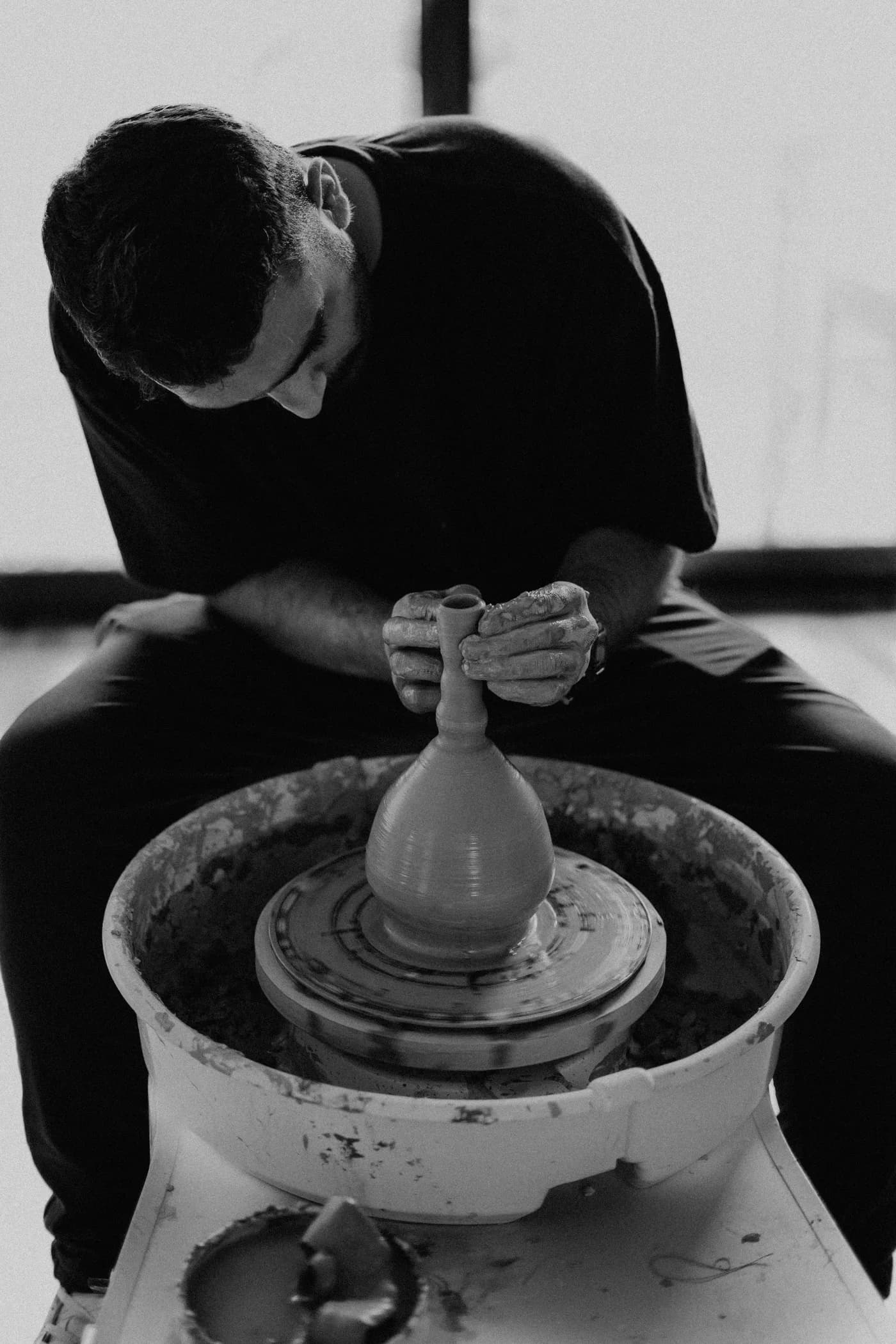
Saw a board and the cut either fits or it does not. Pull a clay wall too thin and it folds over your fingers. Sew a seam and it runs straight or it wanders. There is no interpretation, no waiting for a reply, no meeting about it. Your attention has somewhere concrete to go every single second, and that is most of what people mean when they say they lost track of time at the workbench.
The feedback is also impersonal in a way that turns out to be relaxing. The material is not judging you, it simply behaves. When something fails, you adjust your grip or your pressure and try again, and the failure was information, not a verdict. That is hard to come by in jobs where feedback arrives weeks later and wrapped in people.
The opposite of screen work
This is not an argument against computers, plenty of us like our screen jobs. But screen work has a shape: many parallel threads, output that lives in files nobody can hold, and days that end mid-task because there is always another message. Handwork inverts every one of those. One thread, an output you can pick up, a session with a real end.
That inversion is why two hours in a workshop after a desk day feel like more than two hours off. You are not just resting from work, you are using the capacities the desk leaves idle all day: your hands, your sense of force and resistance, your judgment of how a material is about to behave.
A finished object is proof of time
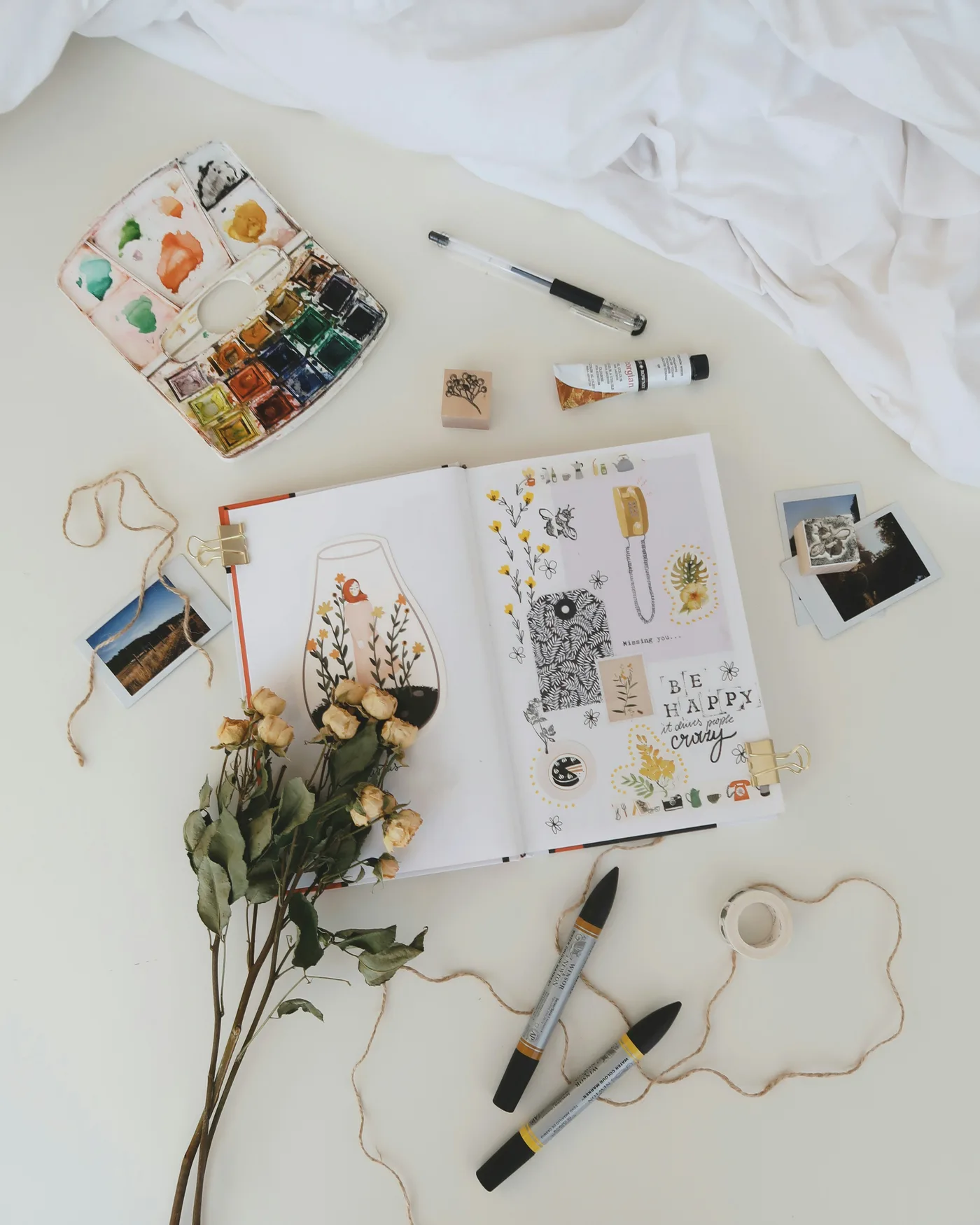
Most evenings vanish without a trace, and a week later you could not say what happened on Tuesday. An evening of handwork ends with a thing: a chopping board, a ring, a bowl, a bound notebook. You can point at it and say, that is where the time went. Even a crooked one carries that proof, sometimes more charmingly than a perfect one.
These objects also age into memory anchors. Few people throw away the first thing they made themselves, however flawed, because it stores the evening it came from. A bought object replaces an older one. A made object accumulates, the way photographs do.
You do not need a workshop in your basement
The practical barrier to handwork is tools and space, and a course removes both at once. The studio owns the bench, the kiln, the machines and the mess, you arrive with nothing and leave with an object. It is also the cheapest way to find out which material suits you before you buy a single tool.
When choosing, follow attraction rather than usefulness: pick the material you keep touching in shops, whether that is wood, clay, metal or fabric. The pull matters more than the practicality, because the pull is what brings you back. Atelo lets you compare craft courses across Switzerland by category and city, so you can test the pull with a single evening.