From consuming to making
You do not need to overhaul your life to make more and buy less. One course is enough to feel the difference between owning something and having made it.
Why made feels different from bought
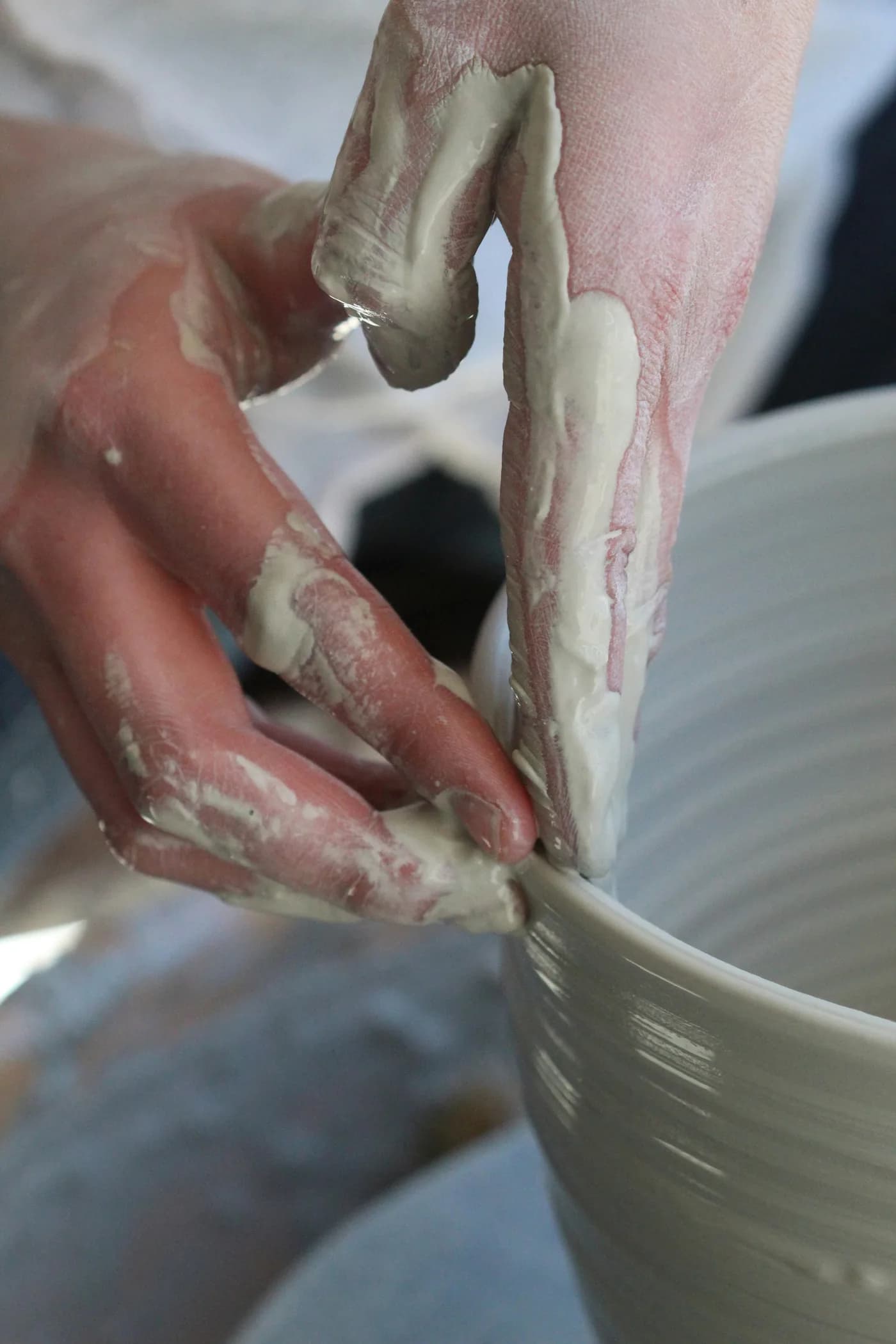
A bought mug does its job and disappears into the cupboard. A mug you shaped yourself keeps a small story attached: the evening you made it, the part that almost collapsed, the glaze that surprised you. That story is what makes handmade objects oddly hard to throw away.
The shift from consuming to making is not about ideology or giving things up. It is about noticing that the satisfaction of finishing something with your hands lasts longer than the satisfaction of receiving a parcel. Most people only need to experience that once to want it again.
Start with one course, not a home workshop
The classic mistake is buying the equipment first: a sewing machine, a full set of carving tools, bags of clay. The gear waits in the basement for the motivation that never comes, and the unused purchase becomes its own quiet reproach. A course flips that order. Tools, materials, and someone who shows you how are already there.
A course also answers the question no shopping cart can: do you actually enjoy this craft, including its slow and fiddly parts? After one or two sessions you know. If yes, you will also know exactly which tools are worth owning, which is usually far fewer than the starter kits suggest.
Repairing is making too
Making does not always mean producing something new. Sewing a button back on, patching a worn pair of jeans, regluing a wobbly chair: repair is the most accessible form of making, because the project is already in your home and the result is immediately useful.
Repair skills also stack quickly. A basic sewing course covers most of what everyday mending needs, and visible mending has turned repairs into something you can show rather than hide. Every fixed object is one thing not bought, which is the quietest way to consume less.
Making changes how you buy
Once you have shaped a bowl or sewn a bag yourself, you read objects differently. You notice seams, glaze runs, and joints. You can tell where someone took care and where a machine took shortcuts. Cheap things stop looking like bargains once you know what work they skip.
That knowledge rarely turns people into non-buyers. It turns them into slower buyers: fewer things, better made, kept longer. If you want to start the shift, pick one craft that already pulls at you and book a single session. Atelo lets you compare craft, textile, and pottery courses across Swiss studios in one place.