Your first pottery wheel session, realistically
Centering is harder than it looks and your first piece will wobble. Why the first wheel session is worth it anyway, explained honestly.
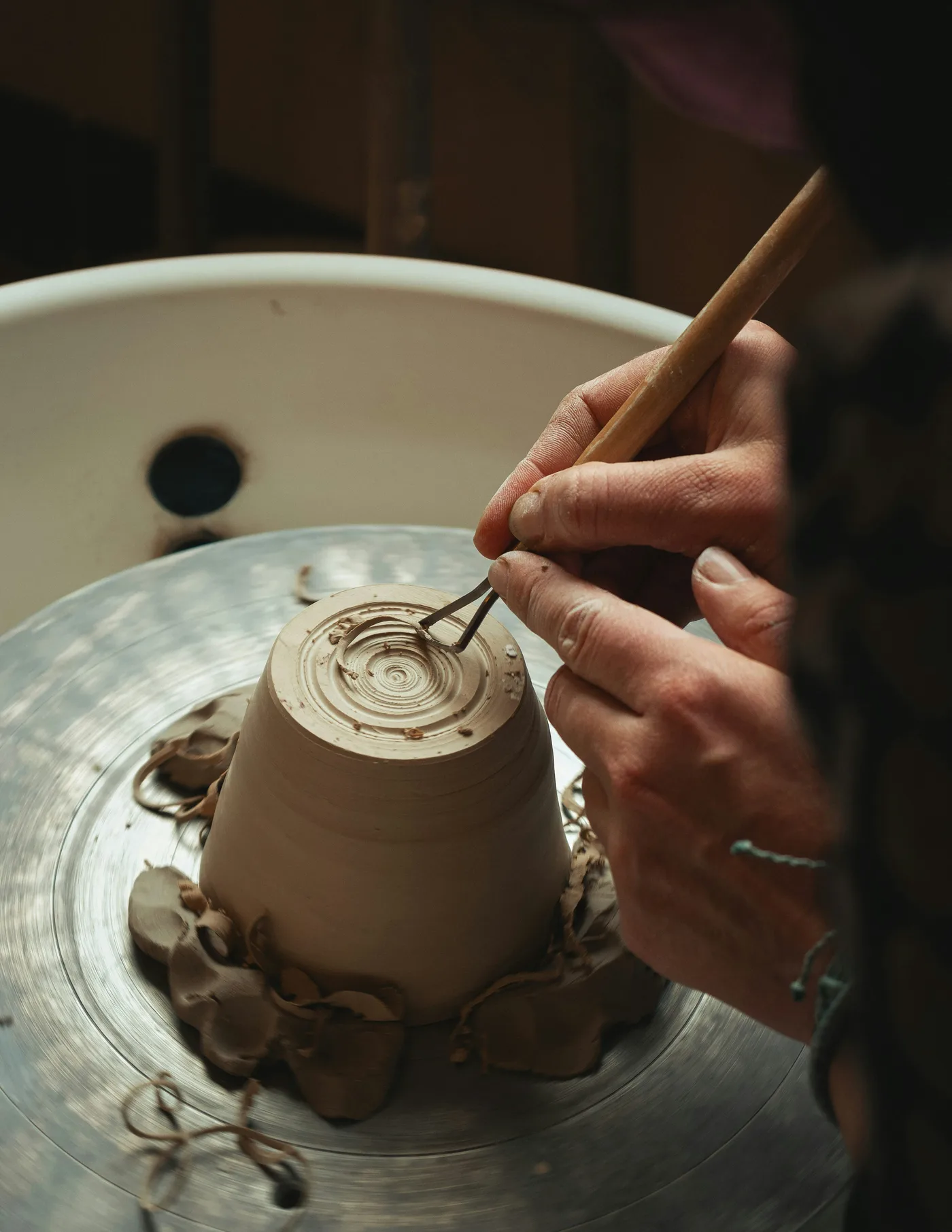
Centering: the first hurdle
Before you shape anything, the lump of clay has to run exactly in the middle of the wheel. Centering looks effortless when the instructor does it and is the hardest part of the whole evening for beginners. Spending a good chunk of your first hour on it is completely normal.
The trick is less force, more posture: brace your elbows, keep your hands still, the clay moves, not you. Good instructors put their hands over yours at the start so you feel what "centered" actually feels like. After that it gets noticeably faster.
Your pieces will wobble, and that is the plan
Set realistic expectations: a first evening usually produces two or three small cylinders or bowls with uneven walls and a gentle lean. At least one piece will collapse on the wheel. That happens to everyone.
And that is exactly the appeal. Unlike many hobbies, you feel immediately what went wrong: too much pressure, too dry, too fast. The progress between your first and third attempt is visible within a single evening.
Why you cannot take anything home right away
Freshly thrown pieces are soft and have to dry slowly first. Then they are fired, glazed and fired again. So you go home without finished ceramics; depending on the studio, your pieces are usually ready for pickup after a few weeks.
Often you choose the glaze colour on the course evening, sometimes you come back for a glazing session. Ask about the process at the start so you know how many of your pieces get fired; many taster sessions include a selection in the price.
Why it is worth it anyway
Few crafts pull you out of your head and into your hands this fast. At the wheel you cannot glance at your phone on the side; two hours pass without you noticing. Many people describe exactly that as the real takeaway of the evening, not the bowl.
If it hooks you, the next step is a multi-week course: only with repetition does centering become reliable and the walls thinner. On Atelo you can compare taster sessions and pottery courses in your region, from a single evening to a full series.