Wine tasting for beginners
What actually happens at a guided tasting, why spitting is professional, and how to enjoy your first degustation without knowing a single tasting term.
What actually happens at a tasting
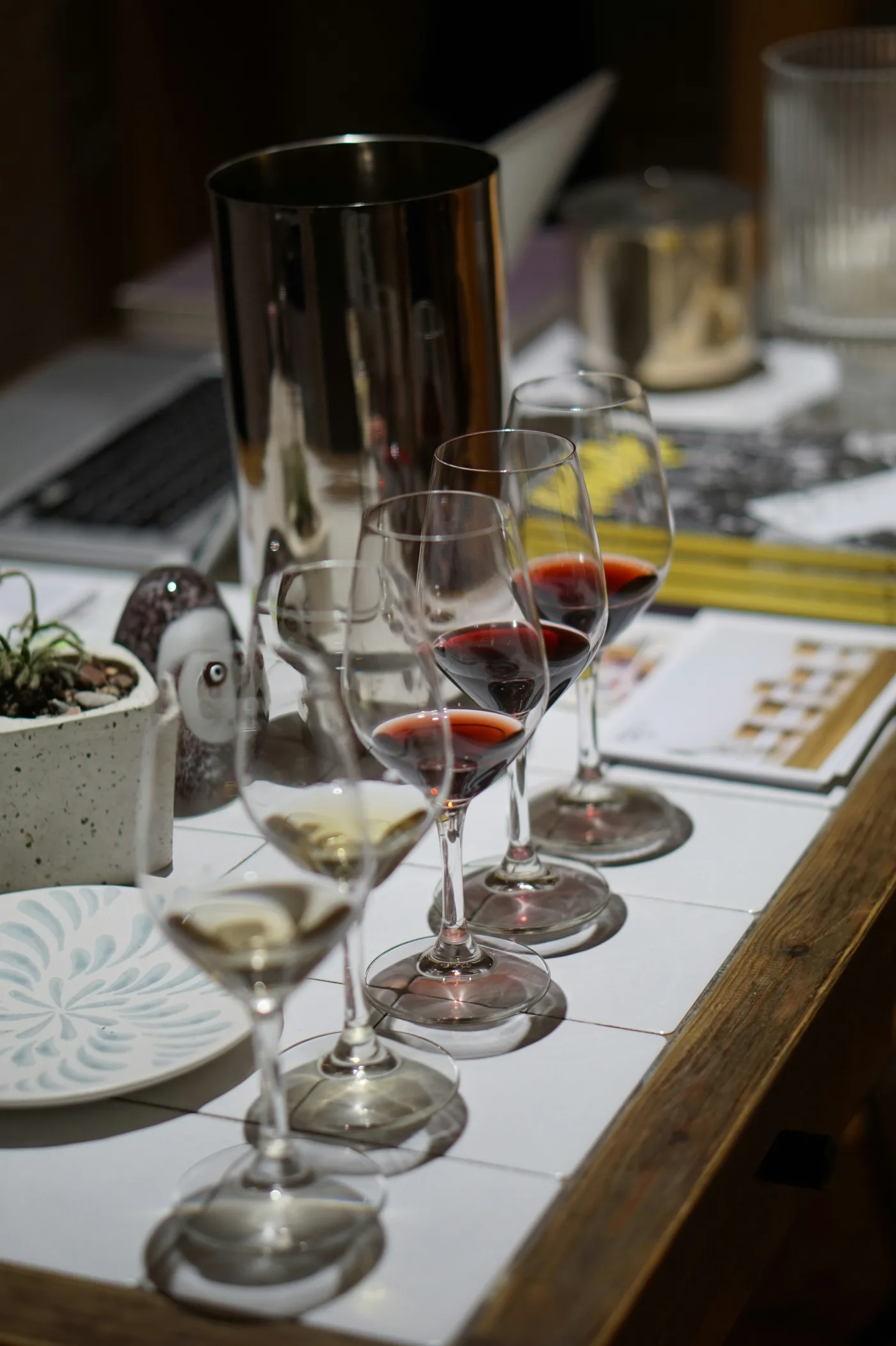
A guided tasting is simpler than its reputation. You sit with a small group, the host pours a series of wines in small amounts, and for each one you look, smell, and taste while the host explains what is in the glass and why it was chosen. Water and usually bread are on the table to reset your palate.
Nobody tests you. The host carries the evening, questions are voluntary, and the small pours mean you taste six or more wines without drinking much in total. Most tastings run around two hours, long enough for a real arc, short enough for a weeknight.
Tasting order, and why spitting is completely fine
Tastings follow a rough order so each wine gets a fair chance: usually lighter before heavier, white before red, dry before sweet. That is also why you should resist skipping ahead, the sequence is part of the teaching.
Spittoons are on the table for a reason. Professionals spit so their palate stays sharp through many wines, and doing the same marks you as sensible, not as a spoilsport. Swallow the wines you love, spit the rest, and you will still taste clearly at glass number seven.
You do not need the vocabulary
The fear of saying something wrong keeps more people away from tastings than the price does. Let it go: 'I like this one more than the last one' is a legitimate tasting note, and every host would rather hear your honest impression than a memorized term.
The vocabulary builds itself. After a handful of wines you start noticing differences, fresher, rounder, drier, and the host gives you words for what you already tasted. That direction, sensation first, label second, is exactly how professionals learned it too.
Formats: one evening, a series, or wine with food
A single guided tasting is the right entry: one evening, one theme, no commitment. Course series go deeper over several sessions and build systematic knowledge of grapes and regions. Food pairing evenings combine wines with matching dishes and suit people who care more about dinner than about theory.
Switzerland is a rewarding place to start. The country has its own wine regions and many local grape varieties, and much Swiss wine never leaves the country, so tastings are often the easiest way to meet it. A guided tasting usually costs about CHF 50 to 120, depending on the wines poured. On Atelo you can compare tastings and wine courses across Swiss providers and book directly.